Saving money on groceries is less about finding one perfect coupon and more about building a routine that reduces impulse purchases and wasted food. The best plan is not necessarily the one with the lowest theoretical total; it is the one your household can afford, prepare and actually eat.
Food prices, store options, dietary needs and available cooking time vary widely. Use the strategies below as a menu rather than a strict set of rules.
1. Start with what you already have
Before planning meals, check the refrigerator, freezer and pantry. Put foods that should be used soon where you can see them. A half bag of carrots, cooked rice or an open jar of sauce can become the starting point for a meal instead of becoming waste.
Keep a short “use first” list on the refrigerator. When something goes into the freezer, label it with the item and date so it does not disappear into an unidentifiable container.
This inventory also prevents duplicate purchases. A sale is not a saving if you already have enough at home or the extra food spoils before you use it.
2. Plan a flexible week, not seven perfect dinners
Choose a few meals based on your schedule. A busy evening may need eggs, sandwiches or a freezer meal; a quieter day may be better for a larger recipe that produces leftovers.
Plan around ingredients that can appear more than once. Roasted vegetables can become a side dish, soup or pasta addition. Beans can work in tacos, salads and stews. A cooked chicken can contribute to dinner and then sandwiches or soup, provided leftovers are handled safely.
Leave one “use what is left” night in the plan. Flexibility helps when plans change and reduces the temptation to order food while groceries wait at home.
3. Make a list organized by the store
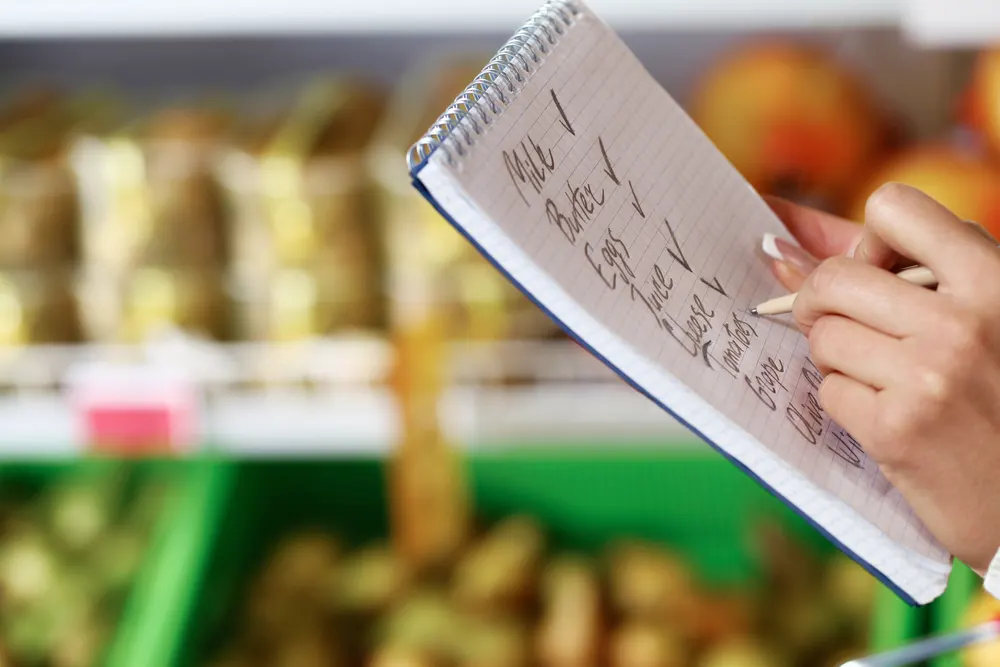
Write the list after checking your supplies and meal plan. Group items into produce, bakery, dairy, frozen, pantry and household sections. A structured list reduces backtracking and makes it easier to notice what is not part of the plan.
Include quantities when they matter: “six apples” or “one 796 mL can of tomatoes” is more useful than “fruit” or “tomatoes.” If another caregiver shops, the detail prevents accidental overbuying.
Online carts can be useful planning tools even if you shop in person. They provide a rough total before checkout and make it easier to remove lower-priority items when the plan exceeds the budget.
4. Compare unit prices, not package prices
The larger package is not automatically the better deal. Compare the cost per 100 grams, kilogram, litre or item. Canada’s Office of Consumer Affairs explains that unit pricing helps compare different package sizes on the same basis.
If the shelf does not show a unit price, divide the price by the weight or quantity using your phone calculator. Then ask a second question: will your family use the larger amount before quality or safety declines? The mathematically cheapest package can still cost more if part of it is thrown away.
Store brands are often worth comparing, but check the ingredient list and Nutrition Facts table when nutrition or allergies matter. Price is only one part of the decision.
5. Choose lower-cost forms of nutritious foods
Fresh, frozen and canned foods can all have a place in a practical kitchen. Frozen vegetables and fruit are useful when fresh produce is expensive, out of season or frequently spoils in your home. Canned beans, lentils, tomatoes and fish can make quick meals; compare labels when sodium, added sugars or allergens are concerns.
Health Canada’s healthy eating on a budget guidance recommends comparing products and limiting highly processed foods, which can cost more while offering fewer nutrients. It also notes that imperfect produce can be just as healthy while helping reduce food waste.
Lower-cost protein options may include eggs, dried or canned legumes, tofu, canned fish and less expensive cuts of meat. What fits depends on your family’s dietary needs, culture and preferences.
6. Buy in bulk only with a plan
Bulk buying works best for foods your household uses consistently, that store well and that are genuinely cheaper per unit. Rice, oats, pasta, frozen vegetables and household staples may qualify. A warehouse-size snack no one likes does not.
Check storage space before buying. Divide large packages into usable portions, label them and freeze only foods that tolerate freezing well. If the quantity is too large, consider splitting a purchase with a relative or friend.
Treat sales the same way. Stock up only when the item is already part of your routine and the sale beats its normal unit price.
7. Turn leftovers into planned meals
Cook extra on purpose when the meal reheats well. Portion leftovers promptly so tomorrow’s lunch is ready before everyone returns for seconds or the food is forgotten.
Food safety matters. Health Canada advises refrigerating leftovers promptly in shallow containers, eating refrigerated leftovers within two to three days or freezing them for later, and reheating them to 74°C (165°F). See its complete food safety tips for leftovers.
Label frozen portions with the name and date. A simple freezer list can help you plan a low-effort evening around food you already paid for.
8. Track what actually works
For two or three weeks, note the grocery total, food thrown away and meals that required an extra store trip. This is not about judging the family; it is a way to find the expensive friction in the routine.
You may discover that shopping at multiple stores saves less than expected after time and transportation, that a particular bulk item prevents takeout, or that certain produce is repeatedly wasted. Adjust the next plan using those observations.
A 15-minute grocery planning routine
Before the next shop:
- Check food that should be used soon.
- Choose three to five realistic meals.
- Add one leftovers or freezer night.
- Write quantities on the shopping list.
- Estimate the total and remove low-priority extras if needed.
- At the store, compare unit prices and substitute flexibly.
Saving money does not require cooking everything from scratch or visiting every store. A repeatable plan that respects your time, budget and family’s needs is more valuable than a complicated system you abandon after one week.
This article provides general educational information. Families dealing with food insecurity or specialized dietary needs may benefit from local community resources or individualized professional guidance.