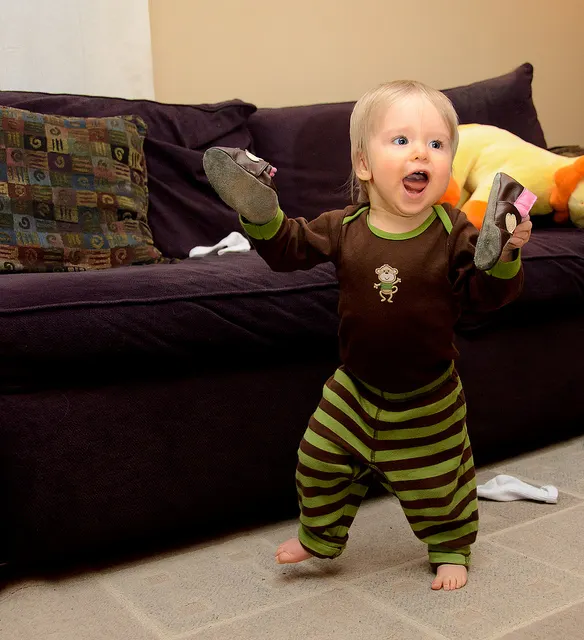
Potty training is easier to approach when it is treated as a set of skills, not a test your child must pass by a certain birthday. Some children show interest early, while others need more time. The Canadian Paediatric Society says that some children are ready as young as 18 months, but most begin between ages 2 and 4.
Readiness is not all-or-nothing. A child does not need to show every sign below before you introduce a potty. Instead, look for a combination of interest, body awareness and practical ability—and make sure your household has enough breathing room to respond calmly.
1. Your child notices the potty or toilet
Interest can be simple: asking what the toilet is for, wanting to flush, or enjoying a book about using the potty. That curiosity gives you an opening to explain the process in plain, neutral language.
You can let your child see that trusted caregivers use the bathroom, while still respecting everyone’s privacy. A doll or stuffed animal can also help you demonstrate the steps without making anyone uncomfortable.
2. They notice when they are wet, soiled or about to go
Your child may tell you that their diaper is wet, pause during play, hide to have a bowel movement, or use the same facial expression each time. These behaviours suggest that they are beginning to connect a body sensation with what happens next.
Name that connection without judgment: “Your body is telling you that pee is coming.” Avoid calling pee or poop “bad,” “gross” or “dirty.” Body functions are normal, and neutral words reduce shame.
3. They have some dry periods
A diaper that stays dry for a while may show that your child’s bladder capacity and awareness are developing. It is one useful clue—not a deadline and not a guarantee that accidents will be rare.
Nighttime dryness is a separate developmental process. A child can be comfortable using the potty during the day and still need a diaper or training pants for naps and overnight for months or years.
4. They can communicate a basic need
Your child does not need a large vocabulary. A word, sign, gesture or picture can be enough to communicate “potty,” “pee,” “poop” or “help.” Decide on the same simple language with grandparents, daycare staff and other caregivers.
Children who communicate differently or have developmental, sensory or mobility needs can still learn to use the toilet. Their plan may require adaptations and guidance from their health-care or therapy team.
5. They can follow one or two simple steps
Toilet learning involves a short sequence: go to the bathroom, lower clothing, sit, wipe with help, dress, flush and wash hands. At first, you will guide most of it. Being able to follow a direction such as “let’s go to the potty” makes practice easier.
Break the routine into small steps and teach one at a time. Independence comes gradually.
6. They can sit safely and help with clothing
Your child should be able to get into a stable sitting position and rise with help if needed. Choose loose pants with an elastic waist; complicated buttons, belts and overalls can create avoidable frustration.
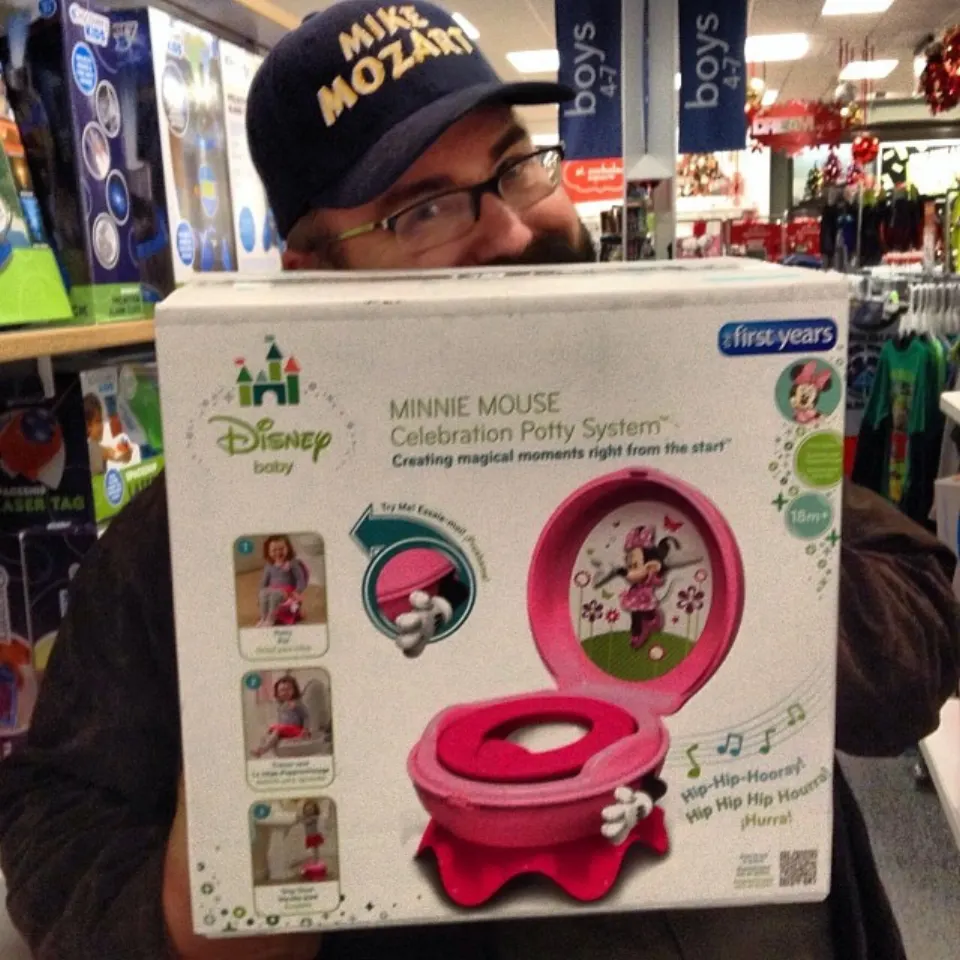
A child-size potty lets small feet rest on the floor. If you use the family toilet, add a secure reducer seat and a sturdy footstool. Foot support helps a child feel safe and get into a better position for bowel movements.
7. Sitting on the potty does not cause strong distress
Let your child explore the potty before expecting them to use it. They can sit on it fully clothed for a moment, choose where it belongs, or read a short book nearby.
Do not hold a frightened child on the seat or turn sitting into a battle. If fear remains strong, step back and try again later. A calm pause protects trust and is not a failure.
8. Bowel movements are comfortable
Painful, hard or infrequent stools can lead a child to hold poop, which can make constipation worse. The National Institute of Diabetes and Digestive and Kidney Diseases advises taking a break from potty training until constipation is addressed.
Talk with your child’s health-care provider if bowel movements hurt, stools are hard, you see blood, your child is withholding, or you suspect constipation. Do not give a child a laxative unless a clinician recommends it.
9. Your family can offer a predictable routine
You do not need a completely empty calendar, but it helps to avoid launching during a move, major trip, new daycare transition or another disruptive week. Choose a period when caregivers can offer the potty at familiar moments and respond to accidents without panic.
Ask daycare or preschool what language and routine they use. Consistency should mean a familiar, supportive process—not forcing a child to sit on command.
10. The adults are ready to be patient
Accidents are part of learning. Prepare extra clothing, washable shoes and an easy cleanup plan. Respond with a neutral phrase such as, “Your clothes are wet. Let’s get cleaned up and try the potty next time.” Punishment, teasing and shame can increase anxiety and resistance.
Praise the behaviour your child can control: noticing a body signal, telling you, walking to the bathroom, sitting or washing hands. The Canadian Paediatric Society notes that rewards are not necessary; warm, specific encouragement is enough for many children.
A simple readiness checklist
Before you begin, ask:
- Is my child showing curiosity or body awareness?
- Can they sit securely and communicate in some way?
- Are bowel movements soft and comfortable?
- Do we have a potty or reducer seat with foot support?
- Can the main caregivers use the same calm routine?
- Am I prepared for accidents without punishment?
If most answers are “not yet,” keep the potty available and revisit the idea in a few weeks. If the signs are there, the next step is a gentle routine—not a race. Our four-step guide to starting potty training shows how to begin.
When to ask for medical advice
Contact your child’s health-care provider if your child has pain, stool withholding, blood in the stool, persistent constipation, new urinary pain or urgency, or a significant regression after previously using the toilet reliably. The Canadian Paediatric Society also recommends discussing toilet learning if a child is not using the toilet by age 4.
This article provides general educational information and is not a substitute for advice from your child’s health-care provider.